
Shopping Cart
There are no more items in your cart
Clays have been used for thousands of years in natural skin care. They can be applied as compresses, poultices, masks, body wraps, bath additives, cleansers and hair care products. They work in perfect synergy with essential oils, which can be added as an option.
Use the table below to find the right clay for your skin and hair type, and its action.
Which clay to choose?
In the table below, you'll find the type of clay to use according to your skin or hair type, or the action you're looking for:
|
Clay |
Skin type |
Type of hair |
Properties |
|
Anti-stress clay |
Aggressed, irritated skin |
soothing, relaxing, exfoliating, purifying |
|
|
Soothing Clay |
Sensitive, fine skin |
soothing |
|
|
White Clay |
Sensitive, reactive, irritated skin |
Dry, devitalized hair |
revitalizing, soothing for sensitive, irritated areas |
|
Ghassoul Clay (Rassoul) |
All skin types, oily skin |
Oily hair |
cleansing clay, purifying, absorbing (excess sebum), soothing |
|
Yellow Clay |
Combination to oily but sensitive and reactive skin |
Devitalized hair |
sebum regulator, toner |
|
Montmorillonite Clay |
Oily skin, problem skin |
Oily hair |
absorbing (excess sebum), relaxing |
|
Oxygenating Clay |
Dull, dull, devitalized skin |
revitalizing, brings radiance and vitality, "healthy glow" clay |
|
|
Pink Clay |
Sensitive, reactive skin |
Dry, dull, fine hair. Combats hair loss |
regenerating, soothing, restores radiance |
|
Red Clay |
Sensitive, irritated, tired, problem skin |
Hair that quickly becomes greasy or lacks shine and suppleness |
Soothing, detoxifies the skin and revives dull, tired complexions |
|
Silhouette Clay |
All skin types |
toning, detoxifying |
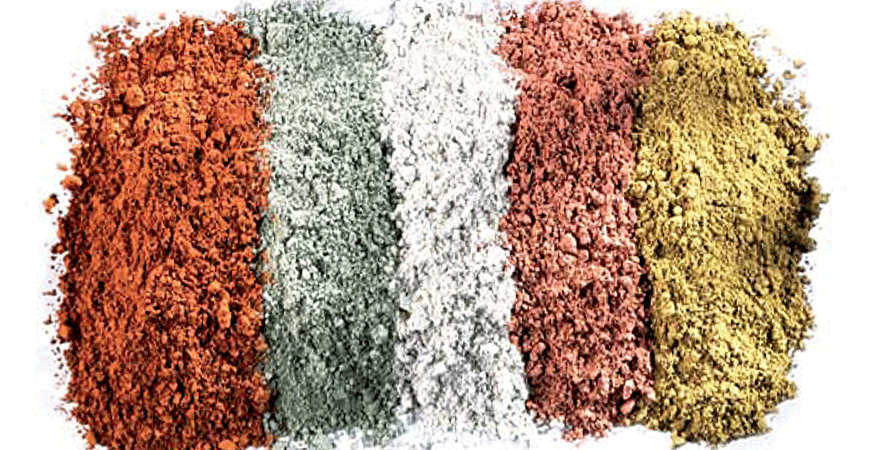
Examples of uses for clays
Soothing clay mask
Pour one to three tablespoons of clay powder into a bowl, add a little hydrolat, herbal tea or spring water until you obtain a firm paste. You can personalize your mask by adding 1 to 2 drops of essential oil corresponding to your skin or hair type. To do this, mix it with a little honey or vegetable oil. Leave the clay paste to rest for an hour before use, ideally in the sun.
Apply a thin layer to the face and neck, avoiding the eye area. Leave on for 5-10 minutes (1-5 minutes on sensitive skin). Do not allow the clay to dry on the skin, but spray it regularly with spring water or a hydrolat.
Moisturize skin well with a beauty cream or oil afterwards.
Clay body wrap
Apply a thick layer to body skin. Leave on for 10 to 15 minutes. Rinse thoroughly with lukewarm water or soak in the bath to prolong the effect of the clay. Rinse well after bathing too. Remember to moisturize your skin with a cream or vegetable oil.
Soothing bath
Pour the equivalent of one to two tablespoons of anti-stress clay into the bath water. Pour the equivalent of one to two tablespoons of firming clay into the bath water. Soothing clay also works in perfect synergy with hydrosols and essential oils.
Good to know!
Never allow clay to come into contact with metal objects during preparation or use, as it will lose its qualities.
Do not allow clay to dry on the skin, but moisturize it thoroughly during application. You can apply a damp cloth to the clay or spray the area with a hydrosol.
Clay dosages for home cosmetics:
- Face or body masks 100% or mixed at 30 - 50% in combination with other clays or active ingredients
- Face or hair masks: 5 - 30%
- Liquid soaps or shampoos: 2 - 10%
- Exfoliating liquid soap and solid soap: 10 - 20%
Storage
Clays keep well in a dry place. Always close the jar tightly after use.
Comments (0)