
Shopping Cart
There are no more items in your cart
- News
- 0 likes
- 5228 views
- 0 comments
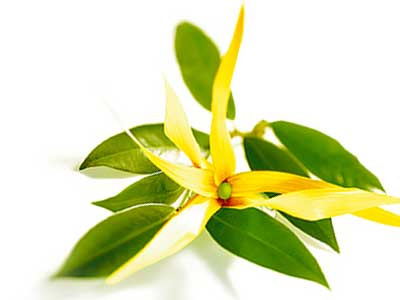
Would you like to buy ylang-ylang essential oil but don't know which one to choose? This article will guide you in choosing the fraction that best suits your needs. Ylang-ylang essential oil, known for its varied and powerful properties, comes in several fractions, each offering distinct aromatherapy and cosmetic benefits. By exploring the different fractions available, their therapeutic uses and cosmetic applications, you can make an informed choice. Discover how this oil, often dubbed the "flower of love", can not only enrich your well-being and beauty rituals, but also offer invaluable support in balancing your body and mind.
Ylang Ylang essential oil - Understanding the five fractions
Ylang-ylang essential oil comes from the flowers of the Cananga odorata tree, distilled by hydro-distillation. The duration of distillation determines the fraction obtained, each with distinct characteristics:
-
Extra fraction = 1 h of distillation
-
Fraction I = 1 to 3h distillation time
-
Fraction II = from 3 to 9h of distillation
-
Fraction III = from 9 to 10h of distillation
-
Complete = from 10 to 20h of distillation
Characteristics of each fraction:
- Extra fraction : This fraction contains the most volatile aromatic molecules, making it the most fragrant and expensive essential oil. Extra and I fractions are mainly used in perfumery for their refined aromas.
-
Fraction I: has strong aromatic properties and is also highly prized in perfumery.
-
Fraction II: Used in cosmetics, it is less volatile but retains interesting properties.
-
Fraction III: Also used in cosmetics, it has a different profile to the previous fractions.
-
Complete Fraction: This is the most balanced fraction, bringing together all the plant's therapeutic molecules. It is therefore mainly used in aromatherapy for its complete and balanced properties.
Use in aromatherapy
Ylang-ylang essential oil is renowned in aromatherapy for its varied and powerful properties. Known for its "magical" effects, it offers numerous benefits:
-
Therapeutic properties: In localized frictions, it is effective against hypertension and muscle spasms, while providing rapid relief from aches and pains, such as toothache. Used in massage, it helps release tension and relax the body.
-
Action on the nervous system: Ylang-ylang influences the autonomic nervous system, regulating the body's involuntary functions and bringing overall balance.
-
Emotional and aphrodisiac effects: nicknamed the "flower of love", this oil is renowned for its aphrodisiac effect, stimulating intellectual and sexual appetites. It is particularly useful for insomnia, depression, anxiety and low desire.
However, it's crucial to dose ylang-ylang essential oil correctly. Too much of it can cause narcotic effects and migraines. Used with care, it can offer invaluable support for emotional and physical well-being.
Use in cosmetics
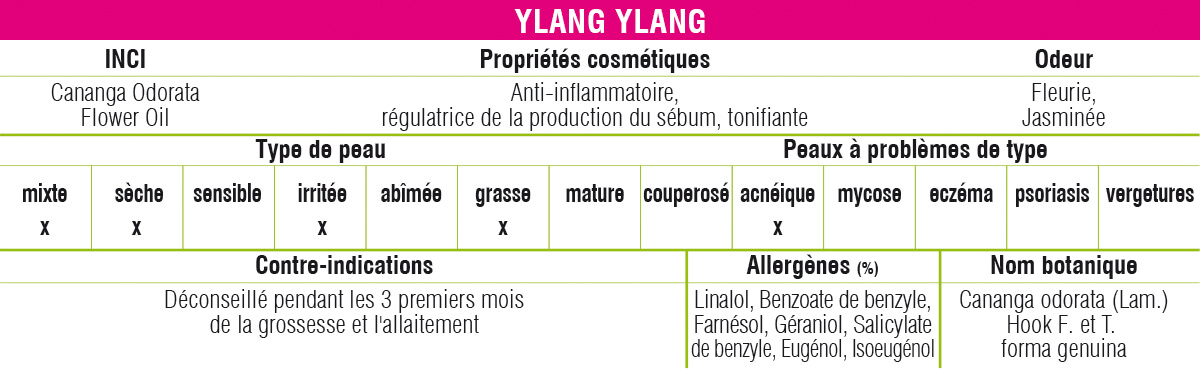
Ylang-ylang essential oil is a valuable asset in cosmetic care thanks to its multiple properties:
-
Soothing: It calms skin irritations and redness, offering immediate comfort.
-
Re-balancing: Ideal for regulating sebum production, it helps balance oily or blemish-prone skin.
-
Hair tonic: Promotes hair growth and natural shine, while strengthening hair structure.
-
Skin tonic: tones and revitalizes the skin, improving its overall appearance and texture.
Used regularly, ylang-ylang contributes to healthier skin and more radiant hair.
Precautions for use
-
Dosage: Ylang-ylang essential oil should be used in moderation. Excessive doses can cause narcotic effects and migraines. Follow recommended dosages to avoid these undesirable effects.
-
Cutaneous application: Before applying to the skin, always dilute ylang-ylang essential oil in a vegetable oil or cream to avoid the risk of irritation. Perform a tolerance test on a small area of skin to check for any allergic reaction or sensitization.
-
Diffusion use: When using ylang-ylang for diffusion, make sure not to diffuse the essential oil in enclosed spaces for long periods, especially if you have children, pregnant women or sensitive people around.
-
Pregnant and breast-feeding women: Although ylang-ylang essential oil is generally considered safe, pregnant or breastfeeding women are advised to consult a health professional before use.
-
Children: Avoid using ylang-ylang essential oil on young children without medical advice. Their skin and respiratory tract may be more sensitive.
-
Storage: Keep essential oil in a cool place, away from direct light, to preserve its properties.
A little botany
Ylang-ylang is a majestic tree from Madagascar, the main producer country, belonging to the Annonaceae botanical family. In the wild, it can reach heights of 15 to 20 meters, but to make it easier to pick the flowers, it is often pruned to a more accessible height, equivalent to a person's height.
The ylang-ylang flower, also known as the "flower of flowers" or the "flower of love", is large and has a distinctive yellow color. Flowering takes place throughout the year, with a notable peak between April and June. The flowers are harvested in the morning, between sunrise and 10 a.m., to guarantee the best quality.
To produce 1 to 1.5 liters of ylang-ylang essential oil, you need around 100 kg of flowers. Each tree yields around 5 kg of flowers per year.
Comments (0)