
Shopping Cart
There are no more items in your cart
- News
- 0 likes
- 2410 views
- 0 comments
What are essential oils ?
Known to ancient civilizations and now scientifically recognized, essential oils are powerful natural plant extracts of extraordinary effectiveness, for health, beauty and well-being. By combining them, it is possible to create original aromatic synergies whose virtues and properties meet targeted needs such as, for example, boosting immune defenses, relaxation, stimulation, relieving joint and muscle pain, reducing the "orange peel" effect, etc.
The benefits of essential oils can be enjoyed as long as the precautions for use are strictly observed. To take full advantage of their virtues, we recommend using only chemotyped essential oils (CT), 100% pure and natural, botanically and biochemically defined (H.E.B.B.D.). Choose essential oils from organic farming, wild-cultivated in regions far from polluted areas, or from controlled traditional cultivation in unpolluted rural areas. Essential oils are used in compositions to be diffused into the atmosphere (see the essential oil diffusion), in beauty products (mixed with virgin vegetable oils, vegetable butters, neutral creams), in massage oils (see at massages with essential oils), in the bath (see essential oils for baths) or even in the kitchen (essential oils in the kitchen). Children can benefit from essential oils, provided they comply with strict dosage rules and under medical supervision (see the essential oils for children to find out more).
What essential oils are needed to get started in aromatherapy ?
There are a huge number of essential oils on the market, and it's often difficult to know what to look for, let alone which ones to buy for a basic family kit.
If you had to choose just five, you'd have to go for thetea tree oil (Melaleuca alternifolia), also known as tea tree, thelemon essential oil (Citrus limonum), thepalmarosa essential oil (Cymbopogon martinii), the essential fine lavender essential oil (Lavandula angustifolia) and themandravasarotra essential oil(Cinnamosma fragrans), also known as saro.
- Tea tree essential oil tea tree oil: anti-fatigue, calming, anti-infectious, broad-spectrum antibacterial, antifungal, anti-parasitic, antiseptic, healing, tonic, venous decongestant. Tea tree essential oil is indicated for abscesses, skin disorders, cavities, respiratory comfort, cold sores with runny nose, young skin imperfections (pimples), mouth infections (canker sores), skin infections (impetigo), respiratory infections, sore throat, dandruff, sores and lice.
- Lemon essential oil antibacterial, antiseptic, blood-thinning, digestive, tonic, liver-protective, anti-nausea. It is indicated in cases of bloating / excess gas, cold, difficult digestion, flu, fatigue, overweight, seasickness / motion sickness and warts.
- Palmarosa essential oil major broad-spectrum antibacterial and anti-infectious, antifungal, antiviral. Neurotonic, cardiotonic. Positivizing. Skin and hair regenerator. Regulates sebum production, healing, astringent, moisturizing.
- Fine lavender essential oil the oil of 1001 virtues! It is, among other things, anti-inflammatory, analgesic, anti-infectious, mild anticoagulant, blood-thinning, decongestant, powerful antispasmodic, muscle relaxant, antidepressant, soothing, rebalancing, sedative, hypotensive, cardio-tonic, healing, skin regenerator, insecticide and vermifuge.
- Mandravasarotra essential oilIt is antiviral, anti-infectious, antibacterial, pain-relieving, antispasmodic, muscle-relaxing, expectorant, immune-boosting, neurotonic, balancing and positivizing. It is indicated for nose-throat affections, fever blisters, respiratory comfort and strengthening of the immune system
What are the properties of essential oils?
Essential oils help treat the little indispositions of everyday life. In addition to their curative action, they work preventively by stimulating the immune system so that your body fights bacterial and viral infections more effectively.
Among its best-known properties is its antiseptic property. At a time when microbial germs are becoming increasingly resistant, requiring the pharmaceutical industry to find ever more powerful antibiotics (which also destroy the saprophytic flora responsible for our immunity), essential oils offer a real alternative.
In fact, their efficacy is stable over time, and their great effectiveness is proven every day, where some antibiotics now fail.
In fact, the antiseptic virtues of plants have been known for thousands of years. For example, mankind discovered that certain herbs, such as thyme, savory and cinnamon, slowed down the fermentation of food.
Today, the antiseptic powers of essential oils have been scientifically proven: thyme essential oil in 5% aqueous solution destroys streptococcus in 4 minutes, staphylococcus in 4 to 8 minutes and tuberculosis bacillus in 30 to 60 minutes.
Depending on the type of essential oil, properties may include (but are not limited to):
- Analgesic (relieves pain through a sedative action on nerves),
- Antibiotic (to fight internal infections),
- Antidepressant (fights depressive states),
- Antiemetic (relieves nausea and the urge to vomit),
- Anti-inflammatory (reduces inflammation),
- Antispasmodic (prevents and treats spasmodic pain of the intestine and uterus),
- Antiperspirant (reduces perspiration),
- Antitoxic (acts as an anti-poison),
- Antiviral (inhibits or eliminates viruses),
- Aphrodisiac (increases libido),
- Astringent (tones tissues),
- Carminative (expels intestinal gas),
- Cholagogue (stimulates bile secretion),
- Healing (accelerates and improves healing),
- Deodorant (reduces odors),
- Depurative (purifies the blood),
- Digestive (stimulates and aids digestion, relieves indigestion),
- Diuretic (increases urine output),
- Emmenagogue (stimulates and regulates menstruation),
- Expectorant (eliminates excess mucus in the bronchi),
- Febrifuge (reduces fever),
- Fungicide (prevents and destroys fungal infections),
- Galactalogue (stimulates milk secretion),
- Hepatic (stimulates and tones the liver),
- Hypertensive (increases blood pressure),
- Hypotensive (lowers blood pressure),
- Immunostimulant (strengthens the body's defenses against infection),
- Nervin (tones the nervous system),
- Sedative (reduces stress and calms the nervous system),
- Stimulant (increases energy and accelerates glandular secretions - release of adrenalin-),
- Stomachic (stimulates gastric digestion),
- Styptic (stops or reduces external bleeding),
- Sudorific (increases perspiration),
- Tonic (tones the body or a specific organ),
- Uterine (tones the uterus),
- Vasoconstrictor (constricts small blood vessels),
- Vasodilator (dilates small blood vessels),
- Vulnerable (accelerates healing).
How do essential oils work?
 |
For essential oils to take effect, they must penetrate the body (friction/massage, inhalation, absorption). Then, through the bloodstream, they reach the areas to be treated. When diffused into the atmosphere, aromas also send olfactory signals to the brain's limbic system, stimulating "emotions". In so doing, the limbic system orders the production of immune substances and hormones. |
What do the terms "100% pure and natural" and "100% natural" mean? H.E.B.B.D. ? ?
Our Essential Oils are 100% pure and natural, Botanically and Biochemically Defined (H.E.B.B.D.) :
- By definition, an essential oil should be 100% pure and natural. However, this statement is intended to guarantee that the essential oil contains no substance other than that derived from the plant. That it is not modified, diluted, deterpenated, rectified or reconstituted.
- Each essential oil comes from a clearly identified botanical variety. This is also known as a chemotyped essential oil.
- The extraction methods used are steam distillation or cold expression for citrus fruit.
Are essential oil compositions more effective ?
When combined, essential oils reinforce each other's active ingredients. In certain cases, therefore, it's a good idea to combine them to achieve synergy and potentiate the desired effect, without exceeding 3 or 4 essential oils to avoid antagonism.
For atmospheric diffusion, associations create original fragrances (see at essential oil diffusion). As time goes by, you'll be able to create your own atmospheric compositions !
How do we choose essential oils ?
Laboratoire Centiflor's team and procedures are draconian when it comes to selecting essential oils (and all other products in the aromatherapy and cosmetic ingredients range). Selection is based on 4 strict quality criteria:
- active ingredient content (confirmed by independent laboratory analysis),
- origin or terroir (we prefer French producers)
- the producer (experience, rigor and seniority),
- non-polluting production methods (we prefer producers who use renewable and/or non-polluting energies).
Purchase price is also a factor in our choice of materials, but it remains secondary to quality criteria. This may explain why, on certain products, we are a little more expensive than others.
At Huiles & Sens, quality, that's what we're all about !
Control on arrival, storage (positive cold), production and complete traceability of raw materials (from the producer to the products in your parcel) Huiles & Sens) complete our quality chain.
What should you find on the label of an essential oil bottle ?
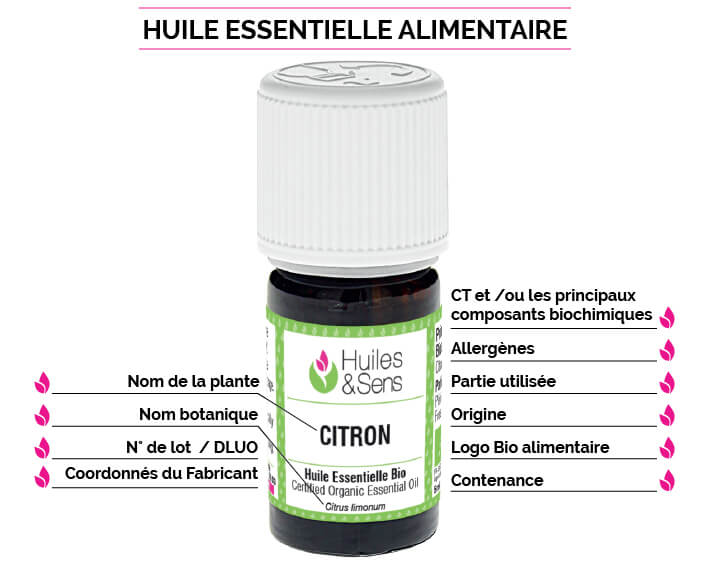
- The common name and, above all, the Latin name of the plant: this is the only way to recognize the exact variety within the botanical species, and to avoid confusion due to variable common names, p.ex. Eucalyptus radiata, Eucalyptus globulus, Eucalyptus citriodora, Eucalyptus polybractea cryptonifera.
- The plant's chemotype (CT): the main or characteristic biochemical constituents present in the essential oil are the signature of the plant's specific origin or terroir.
- Geographical origin: depending on the country, region, soil, climate, altitude, etc., the same plant produces different essences with very specific properties.
- The producing organ or plant part: leaves, fruit, pericarp, twigs, bark, wood, flowering tops, flowers, roots or seeds produce different essential oils for different uses.
- The "Essential Oil 100% pure and natural" guarantee indicates that the essential oil is unmodified, undiluted, undeterpenated, rectified or reconstituted.
- When it comes fromOrganic farmingFor example, an essential oil must bear the name of the certifying body on its label.
- The AB (French) and green leaf (European) logos are reserved exclusively for food products.
- The batch number ensures product traceability.
- The expiration date must be specified.
- Manufacturer's contact details.
- Capacity.
- How to use it.
- Essential oils intended for diffusion or use as cosmetic ingredients must bear pictograms and H and P health and safety phrases, as well as a tactile label.
- The Eco Emballages logo (optional green dot): our company is a partner of the French program for recycling household packaging.
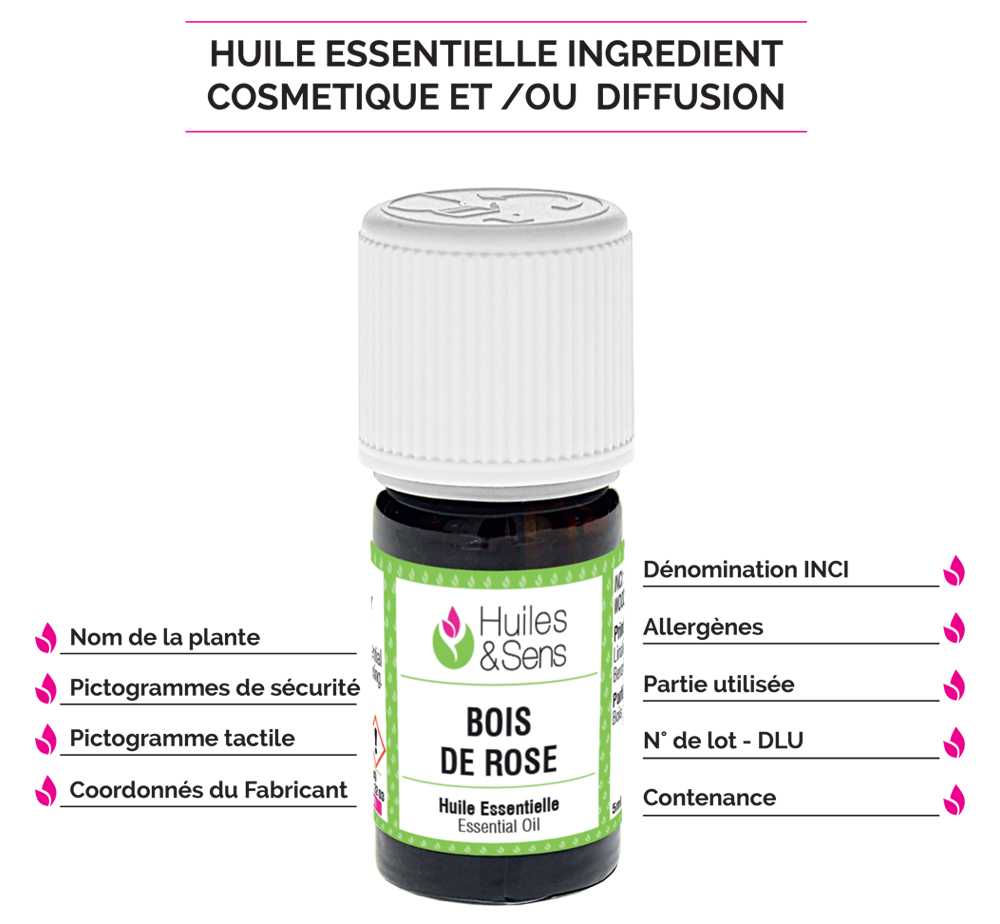
What do pictograms and hazard phrases mean?
Although 100% natural and often extracted from organically grown plants, essential oils are considered a chemical substance.
In this context, they must comply with the CLP (Classification, Labeling and Packaging) regulation, which defines European rules for the classification, labeling and packaging of chemical products. It is on the basis of their classification that the pictograms and safety phrases appearing on the label are defined.
Essential oils that can be considered as foodstuffs (flavoring or food supplements) are exempt from these regulations.
How are essential oils extracted ?
The most widely used process is steam distillation. The principle is simple: steam is injected into a vat (still) filled with the plant from which the essential oil is to be extracted. As it circulates through the plant, the steam picks up its active ingredients. The enriched vapour is directed into a refrigerated pipe and, on contact with the cold, forms droplets which are collected in a container. The liquid that forms reveals the essential oil on its surface (the latter being less dense than water). All that's left to do is remove it. The remaining liquid is used to create a floral water (hydrolat). The other technique, used for citrus fruits (Bergamot, Orange, Lemon, Yuzu...), involves cold-pressing the zest mechanically.
A new technology is CO2 extraction.
What are the different uses of essential oils ?
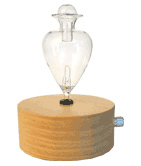 Distribution: Thanks to a electric distributor, essential oils release micro-particles of essential oil into the ambient air. In addition to their therapeutic action, essential oils diffused into the atmosphere eliminate unpleasant odors (tobacco, cooking, etc.), revitalize the ambient air and provide negative ions. Perfume burners can also be used, but by heating essential oils, they greatly diminish their active ingredients.
 Ingestion: Essential oils should only be ingested by people who are familiar with them. They should always be thoroughly diluted before being added as a flavoring to a dish, or ingested as a supplement.
It is therefore imperative to follow the prescription given to you by your doctor or therapist if ingestion is for therapeutic use. Only "food-grade" essential oils can be ingested. You can often replace ingestion of essential oils by applying them to the skin. Make sure your prescriber is properly qualified before ingesting essential oils unnecessarily! Cases where ingestion of essential oils is required are rare.
Some people use essential oils to flavor their dishes. But as they are highly concentrated, you need to know how to choose them and respect the dilution rate, which must be high depending on the oil. As a general rule, never take more than 3 drops of essential oil per adult, and never more than 3 times a day. Never absorb essential oils directly. Always dilute before use:
- one drop on a spoonful of honey, well mixed (!) to melt in the mouth, on a neutral lozengeArom'PastilleWhen the essential oil permits. To add them to a dish, dilute them in a fatty substance (cream, oil) before adding them at the end of the preparation. Never heat essential oils.
- You can also add honey with the essential oil or the solution made with theSolub-HEIn herbal tea or hot, but not boiling, water.
>>> See also below under "ingestion of essential oils - precautions". <<<
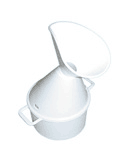 Wet inhalation: This involves breathing in steam laden with a few drops of essential oil (no more than 10 drops). If you don't have an inhaler (which you can buy in pharmacies), simply bend over a bowl of hot water with a towel over your head to inhale as much steam as possible. Do not exceed 15 minutes per inhalation.
 Bath: As essential oils are not water-soluble, they need to be mixed with an emulsifier before pouring into the bath. Depending on the essential oil, you can use milk powder (2 to 3 tablespoons), seaweed powder (1 to 2 tablespoons), liquid soap or neutral shampooBase Neutral (1 tablespoon), someSolub-HE or thevegetable oil (1 to 2 tablespoons) or make your ownbath saltsWith theepsom salt or dead sea salt. Caution: to add essential oils to bath salts, they must first be diluted in vegetable oil. Be particularly careful with irritating essential oils.
Do not exceed 10 drops per bath and do not stay longer than 20 minutes. Add your aromatic preparation just before getting into the water.
Friction/massage: Applied to the skin, essential oils penetrate tissues and irrigate the body with blood. Venous passages such as the wrist or the crease of the elbow should be favored. As a general rule, essential oils should always be diluted before being applied to the skin. Exceptions are lavender essential oil and tea tree. It is advisable to mix them beforehand with an vegetable oil(jojoba, macadamia, rosehip, argan, coconut, wheat germ, sweet almond, olive, apricot kernel...).
What are the dosages of essential oils ?
|
An essential oil is effective for a given dose over a given period of time. Contrary to what is stated in the French literature and "copied/pasted" from one website to another, cases where the ingestion of essential oils is required are rare. |
|
A simple rule of thumb can be used to determine the doses that can be absorbed internally:
- adults: 1 drop per 25 kg body weight, 1 to 3 times daily.
- children: do not use essential oils internally
IMPORTANT: This information is given for general information only. For any therapeutic use of essential oils, it is essential to consult a doctor/pharmacist specializing in aromatherapy
Concentrations of essential oils for external use :
- Bath (adult): 10 drops maximum, to be diluted in a solvent (Solub-HE, , Base Neutral)
- Foot bath: 4 to 6 drops
- Massage cream: 2 to 2.5%
- Massage oil: 2 to 10% - i.e. 4 to 20 drops of EO in 1 tablespoon of fatty oil
- Wet inhalation: 6-10 drops in 250 ml of water (depending on age)
- Dry inhalation: 2-3 drops on a handkerchief or in an inhaler stick
- Atmospheric spray: 50 to 100 drops in 30 cl of water (shake well before use)
- Face cream: 0.1 to 1%
- Body lotion: 1 to 1.5%
- Ointment: 3 to 5%
- Insect repellent: 2 to 2.5% - approx. 4 to 5 drops in 1 tablespoon of lotion
- Shampoo and conditioner: 0.5-1.5% 20 to 30 drops for 1 glass of shampoo (125 ml)
Measurement and equivalence :
35 drops = about 1 ml
175 drops = about 5 ml
1 tablespoon = about 10 ml
Calculate your dosages
This tool will enable you to easily calculate the dosages of your preparations.
How to store essential oils ?
Essential oils can be kept for several years. Some even tend to improve with age (with the exception of essential oils extracted from citrus peel, which can be kept for no more than 2 years).
Close bottles tightly after use, as the aromas evaporate into the atmosphere. Avoid laying the bottles down, so that the essential oils do not come into contact with the plastic dropper for too long (oils have a corrosive action on plastic). Store your bottles in a cool, dark place.
Even though all our bottles are fitted with child-resistant caps, you should always keep them out of their reach !
Precautions when using essential oils
- Essential oils are extremely rich in active ingredients and extremely powerful. They must be handled with care and used in moderation.
- Scrupulously respect the recommended dosages and methods of use, which may differ according to the uses indicated by your doctor/aromatherapist, and which must be appropriate to your condition and situation.
- Do not give essential oils to children under 7 years of age (or older for certain essential oils) without consulting a physician.
- Pregnancy and breast-feeding: Essential oils should not be used during pregnancy without medical advice. Some essential oils may have an abortifacient or milk-suppressing effect.
- Do not use essential oils on people with a history of epilepsy or convulsions, those hypersensitive to essential oils, asthmatics or allergy sufferers.
- Never inject essential oils intravenously or into the muscle.
- Allergy: It's advisable to perform an allergy test before using an essential oil. To do this, apply a drop of essential oil (mixed with a drop of vegetable oil) to the crease of the elbow. If there is no reaction after 24 hours, you can use the essential oil.
- Respiratory allergies, Asthma: the use of essential oils for atmospheric diffusion is contraindicated (unless medical advice is sought).
- Sun: Avoid exposure to sunlight and UV rays in the hours following the application or use of a photo-sensitizing essential oil (Angelica seed, Bergamot, Lemon, Lime, Khella German chamomile, Tarragon).
- Accidental absorption: Ingest (and, if possible, induce vomiting) pure vegetable oil (1 to 3 tablespoons, olive, sunflower, etc.). Never give water to drink! Essential oils are not water-soluble. Call the Poison Control Center, number available on http://www.centres-antipoison.net/
- Never apply essential oils near or on the eyes, ear, nose or ano-genital mucous membranes.
- Accidental eye splashes: Wipe the eye with absorbent cotton soaked in pure vegetable oil, or apply one or more drops of vegetable oil to the eyeball. If necessary, repeat this operation several times. Do not clean with water!
- Essential oils are not water-soluble. If you pour them into a bath or dish, they float to the surface and may cause skin irritation or burns. Always dilute them well beforehand (p.ex. in neutral liquid soap, vegetable oil, honey, glycerine, liquid cream, Solub-HE).
- Avoid contact of pure essential oils with the skin. Some essential oils are dermo-caustic. Used undiluted, they can irritate or burn the skin (p.ex. Cinnamon, Wintergreen, Clove, Oregano, Thyme, Savory). Mint essential oil has a cooling effect when applied to the skin. Do not use in the bath !
- Consult a physician in the case of serious illness or prolonged use.
- Storage: By law, essential oils can be stored for up to 5 years. However, some essences keep longer, and even improve over time. Essential oils extracted from citrus peel should be used within 2 years for cutaneous applications or in a bath, but can be used beyond this date for diffusion.
- Close bottles tightly after use, as aromas and active ingredients evaporate into the atmosphere.
Avoid laying the bottles down so that the essential oils don't come into prolonged contact with the plastic dropper (the oils have a corrosive action on the plastic). Store your bottles in a cool, dark place. - Keep out of reach of children.
Diffusion of essential oils:
- Use only 100% pure & natural oils.
- Make sure you choose the right essential oils (allergies, contraindications).
- Choose essential oils suitable for diffusing into the atmosphere (especially Rosewood, Bergamot, Lemon, Lemongrass, Eucalyptus radiata, Geranium, Lavandin, Lavender, Lemongrass...), Litsée citronnée, Mandarine, Menthe poivrée, Monarde, Myrte, Néroli, Orange, Patchouli, Pamplemousse, Palmarosa, Petit Grain Bigarade, Pin Sylvestre, Ravintsara, Romarin, Santal, Ylang Ylang).
- Some oils can be irritating to the respiratory mucosa, or even neurotoxic if used pure or over long periods.
- Do not diffuse in the presence of children under 7, pregnant or breastfeeding women, allergic persons or asthmatics.
- Never use continuous diffusion in a closed room.
- Do not broadcast all night in the presence of a sleeping person.
- Position the dispenser in such a way that people do not receive the spray directly on their face or eyes.
- Always keep your diffuser and essential oil bottles out of the reach of children.
- Don't forget your pets, who may also be sensitive to diffusion (or even allergic).
Ingestion of essential oils - Precautions :
In general, essential oils should not be ingested. However, if you still wish to ingest them, it is important to observe the following precautions: Check that the essential oil is "food-grade". Never ingest pure essential oils without first diluting them (vegetable oil, honey) or on a neutral carrier. Do not exceed the recommended daily dose. An essential oil is not a substitute for a varied, balanced diet. Do not use on pregnant or breast-feeding women, people with a history of epilepsy, or those hypersensitive or allergic to essential oils without prior medical advice.
The information on essential oils available on our website (dosages, combinations, indications) is provided for your information. It represents a synthesis of various reference works on aromatherapy. It does not constitute medical information, nor does it engage our responsibility.
Comments (0)